

Tribunal Verdict is in – Coal companies: GUILTY!

Today we had the Central Appalachian women’s tribunal on gender and climate change. It was an incredible event and experience. The stories and testimonies of the women of the Appalachian mountains being affected by coal mining and mountain top removal were extraordinary. The persistence and dogged cruelty and crimes of the coal industry haven’t deterred these women, their families, their activism, despite death threats — these coming in different forms such as explosions near homes to remove coal from the mountain, coal dust making lung cancer very likely, poisoned water in wells, streams and pipes, or just blatant threats to the most outspoken activists.
There is a real raping of Mother Earth in the Central Appalachian mountains. Mountain top removal (MTP), what has been done in this area for the past 15+ years. Basically, instead of digging deep into the mountain they are taking the coal from the top of the mountain which is much cheaper to do. They proceed to shave the top of the mountain, removing all of the trees, all of the vegetation, dead bodies (in the case of cemetaries) and breaking up the mountain slice by slice to remove the coal. The coal industry then fills another empty side of a mountain top with the useless mountain rock.
On the car drive from New York to Charleston (about 10+hours total) we drove through mountains for the last couple of hours. The mountains in this early Spring time were many shades of vibrant green. New leaves shown a brilliant green against a deeper, richer growth. The forests were teeming with a green! What mountain top removal does is leave a desert of lifeless dirt at the top of the mountain! All these beautiful trees are cut and removed. It is truly an amazing site to see (check out Burning the Future: Coal in America, the 2007 doumentary. The devastation blows you away.
I haven’t fully digested it all but felt compelled to write all you, in particular the organizers of the past tribunals and hearings—15 in 2011, 2 in 2010, 7 in 2009, 2 in 2008 and the 3 in 2007 which kick-started this for the FTF. This first tribunal on gender and climate change in the United States was a splendid follow-up to all of those. It was well worth the effort. The women living on the mountains are amazing. What they’ve been through, how they are fighting and struggling is simply inspiring and astounding. Whatever small way we can help the cause and connect to a larger global struggle is well worth it. Bringing the message to Rio+20 will be key — and by the way at the end of the tribunal I received a message from the official Rio+20 secretariat that our event request for the presentation of the tribunals at the Rio meeting had been accepted! The date is forthcoming but we will need to prepare further to present the findi ngs of the past 15 tribunals along with the Central Appalachia and the upcoming Chicago tribunal. This good news added to the celebrating knowing how important it is to get the message of the crimes of the coal companies out in the world! Thank you to so many for separate comments congratulating us and expressing your support! Your messages are appreciated!.
******************

The Feminist Task Force, together with the Ohio Valley Environmental Coalition (OVEC), the Civil Society Institute and our partners at the UN, the Loretto Community at the United Nations, present the first Women and Climate Justice Tribunal in the United States. The tribunal will be held May 10, 2012 in Charleston, West Virginia.The tribunal will feature the testimony of women throughout the Appalachian mountain region concerning the effects of mountaintop removal and other coal industry abuses on their lives, families, and communities.

 LAUNCH OF THE “FTF IN U.S.” SERIES:
WOMEN’S TRIBUNALS ON GENDER AND CLIMATE JUSTICE
The Feminist Task Force launched the next series of the Women’s Tribunals on Gender and Climate Justice 2012 today at the AWID Forum “Transforming Economic Power to Advance Women’s Rights and Justice” in Istanbul, Turkey. At the Forum session, Ecological Health of our Planet: The Climate Change Challenge,” FTF Global Coordinator, Rosa Lizarde, launched the follow-up series to the “Strengthening Voices, Search for Solutions” Women’s Tribunal series on Gender and Climate Justice. 
“Today we launch the next gender and climate justice tribunals which will take place for the first time in the global North, in the United States,” said Rosa. “All the other gender and climate justice tribunals have taken place in the global South in Asia, Africa and Latin America. It’s time to work in the U.S, in the ‘belly of the beast.’ It’s time to show how climate change is affecting women around the world, in the north and in the south, in similar ways.”
The first women’s tribunal on climate justice in the US will take place in the Central Appalachia Mountains and in partnership with the US-based Loretto at the UN NGO and the Ohio Valley Environmental Coalition (OVEC) based in West Virginia, as well as OVEC partners. The Appalachia Mountains is a region that has experienced persistent poverty. The tribunal will highlight how women living in persistent poverty areas and impoverished communities are being affected by climate-related issues. The tribunal will feature the testimony of women throughout the Appalachian mountain region concerning the effects of mountaintop removal and other coal industry abuses on their lives, families, and communities. The tribunal will take place in Charleston, West Virginia on May 10, 2012.

The second tribunal will take place in Chicago, Illinois in June 2012 through partnership with the Loretto at the UN, the Eco-Justice Collaborative and the Little Village Environmental Justice Organization (LVEJO), a community group based in the city’s Mexican-American neighborhood, Little Village. The Tribunal will focus how women of color are being impacted by the City of Chicago’s Fisk and Crawford coal burning power plants, and other coal-related effects to the greater Chicago area. 

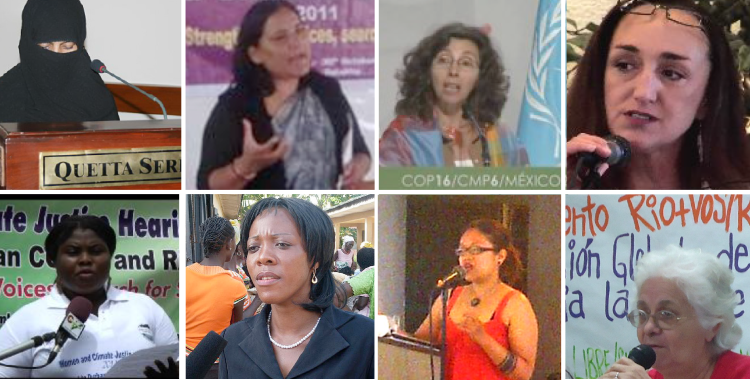
The Women’s Tribunals have been the flagship work of the FTF in calling attention to the centrality of gender equality to end poverty and making the links between the climate change and the feminization of poverty.  The FTF spear-headed the international women’s tribunals on poverty in 2007 and followed-up with tribunals on women and the MDGs (2008), social exclusion (2010), and the two series of women tribunals on gender and climate justice in 2009 and 2011.  The 2011 Tribunal series on Gender and Climate Justice was organized in collaboration with GCAP, Greenpeace International, and Inter Press Service, and took place in 15 African, Asian and Latin American countries in the fall of 2011. The Tribunals focused on the collection of authentic, specific and exemplary testimonies of grassroots and rural women who have experienced climate change related problems in their lives and communities, and their search for solutions.

The Women’s Tribunals are part of an integrated agenda of the FTF “Road to Rio Roadmap”, which includes advocacy and campaigning on the COP17, G20 Summit, UN CSW, Rio + 20 and MDGs’ Post-2015 Processes .
For more information contact:

Rosa G. Lizarde Global Coordinator, Feminist Task Force e-mail: feministtaskforce@gmail.com weblog: www.feministtaskforce.org

At the opening of the AWID Forum Lydia Alpizar, AWID’s Executive Director, welcomed the 2,245 participants from 150 countries to the AWID Forum of feminists and women’s rights activists in Istanbul. While she looked to the past to commemorate the organization’s 30th year, she also looked to the future and issued an urgent call to action for us to double our efforts to build a women’s movement as a collective power, to reconstruct a civil society base of solidarity and support, and to more urgently address the existing and new challenges to women.

The 12th AWID Forum, “Transforming Economic Power to Advance Women’s Rights and Justice,” brought old and new friends together once more to dialogue, assess, network, celebrate and share knowledge, perspectives and friendship, in a safe space for collective thinking and strategizing. This morning’s opening plenary also brought an insightful presentation by Gita Sen on five points: 1 – struggle for development; 2 – struggle for equality and justice; 3 – struggle against selling out; 4 – current shifts, power and spaces; 5- how we might take on the huge challenge of economic power. In true Gita style, she stretched our minds and challenged us to grapple with these issues, producing more questions than we can probably answer in the next few days of the Forum. AWID is collecting and recording presentation so we hope to be able to review all the speakers and sessions. The FTF members, Marta Benavides, myself and three young women who are attending the AWID Forum for the first time, are active on the ground and will be sending updates from the numerous in-depth, break-out, “dymystifying economics,” cultural and plenary sessions.

The FTF is taking part in the following sessions: Changing World Geopolitics and Global Governance: Making sense of the trends, actors and their implications for women’s rights (organized by AWID, Forum Planning Committee and Global Policy Forum); Rosa presenting. Ecological Health of our Planet: The Climate Change Challenge (organized by AWID, Forum Planning Committee, Groots, Huairou Commission and DAWN); both in-depth sessions taking place over the course of two-days running 6 hours for a chance to follow an issue and delve into the topic. Rosa Lizarde, Global Coordinator, presenting.

Marta Benavides and the three young women, Viviana Bernal (former FTF intern/assistant), Katie McGhee and Kristen Kane-Osorto will be presenting at a skills-building workshop, Creating a Culture of Peace for Economic Transformation: Skills to empower, knowledge to transcend (organized by SIGLO XXIII, Museo Aja and co-sponsored by the FTF).

As a member of the GEAR Campaign, will also closely follow and attend the GEAR sponsored events as well.

Highlights: In the second half of today’s two-part Ecological Health of our Planet: The Climate Change Challenge, I presented the flagship work of the Feminist Task Force, the women’s tribunal, and how the FTF has spear-heading the international women’s tribunals on poverty (2007), women and the MDGs (2008) and social exclusion (2010), and the two series of women tribunals on gender and climate justice in 2009 and 2011. The presentation was part of a session focusing on practical initiatives by grassroots and rural women’s organizations.

At this session we also launched the “FTF in the US” tribunal series: In the Central Appalachia Mountains: Through partnership with the Loretto at the UN, partners in New York, and the Ohio Valley Environmental Coalition (OVEC) based in West Virginia, as well as other partner organizations, the first women’s tribunal on climate justice will take place in the United States, highlighting how women living in persistent poverty areas and impoverished communities are being affected by climate-related issues. The tribunal will feature the testimony of women throughout the Appalachian mountain region concerning the effects of mountaintop removal and other coal industry abuses on their lives, families, and communities (May 10, 2012).

In Little Village, Chicago, Through partnership with Loretto at the UN, and Eco-Justice Collaborative and the Little Village Environmental Justice Organization (LVEJO), a community group based in the city’s Mexican-American neighborhood, Little Village. Testimonies will be presented by minority women impacted by the city’s Fisk and Crawford coal burning power plants, and other coal-related effects to the greater Chicago area (June, 2012).

This International Women’s Day (IWD) we commemorate RURAL WOMEN as well as use the occasion to raise concerns about their situation worldwide. Here at the United Nations (UN) Headquarters, the theme for the 56th Commission on the Status of Women (CSW), RURAL WOMEN and their role in eradicating poverty and hunger, brings overdue attention to rural women and looks also at the current challenges they face. UN Secretary General Ban Ki Moon praised the advancements of women in certain sectors while acknowledging that rural women and girls, who make up a quarter of the global population, “routinely figure at the bottom of every economic, social and political indicator, from income, education and health to participation in decision-making.”

Coincidentally, our celebration of IWD comes days after the news this week from the World Bank that the world has met the first UN Millennium Development Goal – to half extreme poverty by 2015. It would seem, therefore, we have a dual reason for celebrating.

Unfortunately, although we can take hope in some news of poverty reduction, the stories, experiences, information and testimonies we have heard and documented – not only during the CSW and but in our Women’s Tribunals on Poverty and Gender and Climate Change series — do not paint such a rosy picture as the graphs and charts by the WB researchers.

It seems that what they are measuring is in real numbers, not real lives.

The WB research draws on data and expertise for the period 1981-2008, “with preliminary estimates (on a smaller sample) for 2010.” Without factoring the full impact of the 2008 financial crisis and ongoing economic crisis, and applying a gender analysis, the news of halving extreme poverty appears to be a half-truth.

This same year the World Bank World Development Report on Gender Equality and Development argues that “gender equality is a core development objective in its own right. It is also smart economics.” It’s great to see all the attention on women, with much on women’s economic potential — Newsweek and the Daily Beast have their 150 Fearless Women and a cadre of articles featuring women’s empowerment, the Financial Times their Women at the Top. Even Google has an IWD doodle today. The fact remains that progress toward gender equality has been limited.

When factoring in the impact of climate change on the lives of rural and impoverished women, the news is even more dire. As rural women, María Ibarcena, Cleofé Huatay, Hilaria Yanque Bereche and Bertha Atencio Sonilda, testified in the Cuzco, Peru Gender and Climate Justice Tribunal late last year, the effects of climate change have altered their lives by generating economic losses, increased poverty and perpetuated a lack of confidence and hope in the future. It has caused the break-up of their families and brought both physical ailments and mental anguish.

In Bangladesh, 34 year old Munni Akhter testified of her struggles as a woman farmer. After her home was destroyed twice by river erosion, she started her life in a small cottage with her 2 sons and a daughter. “All my crops have been destroyed by saline flood 4 years ago. My only cow, and 20 ducks along with my furnishings floated away. Our debt has increased because of the diseases we suffered from drinking the flood water. Many new skin diseases have emerged that were not there before.”

In the Niger Delta, Nigeria, a region long known for environmental degradation due to oil extraction in the area, rural women who rely on farming have experienced food insecurity due to the drastic changes in the rainfall pattern that have severely affected agricultural yields in the region.

These and many other accounts were heard and presented at the CSW. Even UN Women Executive Director, Michelle Bachelet, acknowledged at the Rural Women’s Speak-Out last week that rural women’s contribution as agricultural farmers was hampered by the current development model which did not allow “the agricultural sector to prosper.” Rural women, who account for a great proportion of the agricultural labor force, produce the majority of food grown, especially in subsistence farming, and perform most of the unpaid care work in rural areas.

As we celebrate women in all their diversity and their achievements today, let us remember and herald the voices of RURAL WOMEN who in their daily struggle bring forth hope and courage, bravery and perseverance in the face of adversity day in and day out.

On behalf of the Feminist Task Force, let’s celebrate International Women’s Day!

Rosa Lizarde

Global Coordinator, Feminist Task Force

Feminist Task Force events and co-sponsored activities at the UN Commission on the Status of Women (CSW):

SUSTAINABLE DEVELOPMENT FROM G20 TO Rio+20: STRATEGIES FOR EXPANDING THE FINANCING FOR GENDER EQUITY, organized by Heinrich Boell Foundation with FTF Coordinator, Rosa Lizarde, as a panelist.

Tuesday, March 6, 12:30 – 2pm, CCUN, 10th floor, NYC

“STRENGTHENING VOICES, SEARCHING FOR SOLUTIONS: HOW RURAL WOMEN ARE IMPACTED BY CLIMATE CHANGE.”

Monday, March 5th at 4:30pm, CCUN, Hardin Room, 11th floor, New York City (corner of 44th St. & 1st Ave. NYC. Open to public. No UN badge needed).

Panelists will share the findings of the women’s tribunals on gender and climate justice organized in the lead up to the COP17. Organized by the Feminist Task Force, GCAP in collaboration with Greenpeace International and Inter Press Service, and in partnership with HOPE-Pakistan, Cidadoa Global, SERR-Siglo XXIII, Niger Delta Women for Peace and Development-Nigeria, Jagaran Nepal, GCAP Mexico, Centro de Mujeres Peruanas Flora Tristan, AWEPON Uganda and Tanzania.


Past events:

WHY MUST WOMEN LEAVE HOME? THE PUSH FACTORS FOR RURAL WOMEN’S MIGRATION organized by United Methodists Women with FTF as co-sponsor and with FTF member, Marta Benavides speaking.

Thursday, March 1, 10:30am – 12pm, CCUN, 2nd floor, NYC

RURAL WOMEN’S SPEAK-OUT, co-sponsored event with the NGO CSW Committee, UN Women, CWGL, CONGO and FTF.

February 29, Wednesday, CCUN in NYC, 2nd floor, 5:30 – 7:30pm

“RURAL WOMEN IN CENTRAL AMERICA:  DEFINING THE WORLD WE WANT  Learning from the experiences of rural women in El Salvador who are creating solutions that are used to leverage and impact policy and programs at the municipal, national and global levels.

Tuesday, February 28, 4:45 – 6:15pm, United Nations North Lawn Building, Conference room B. For more information, contact Marta Benavides at (tlalibertad_at_gmail.com).

Rural Women’s Speak-Out Training and WOMEN’s TRIBUNAL TRAINING by FTF Global Coordinator, Rosa Lizarde and GCAP Co-chair/FTF member, Marta Benavides 3:30 – 5:00 pm break-out session at the CSW NGO Consultation Day - 26 February 2012, 9 – 5 pm, The Salvation Army (120 West 14th Street, New York City)

For more information, contact Rosa Lizarde <rosaencasa_at_aol.com>.


Dear colleagues,
As we ease into the new year, I want to extend my wish to all for renewed hope and energy to come to bear on what is promising to be a packed agenda for 2012. For those of us here at the UN, there already has been a flurry of activity and planning. Some is centered on the upcoming Commission on the Status of Women (CSW), however, there are many other issues to tackle related to the increasing feminization of poverty and the systemic issues at its core. To continue to bring focus and direction, at the end of last year the FTF Facilitation Team members met to appraise, review and prioritize our work in the near future. More will be shared separately, but we hope you’ll continue to show your involvement and enthusiasm, vitality and participation in the menu of work of the FTF.
CSW/IWD
As the top end of the calendar goes, and just to highlight some of the first half work, some members will be attending the World Social Forum later this month. We hope to hear back from those who will be there on how the WSF is kicking off the new year. Later in February and leading into March, we have the CSW in New York and March 8th – International Women’s Day focused on rural women.
More information about the CSW will be sent by one of our interns, for now, please do register anyone you think might be able to attend. As the FTF we will collaborate on a Rural Women’s Speak Out with the NGO CSW Committee, UN Women, FAO, Huairou Commission, Center for Women’s Global Leadership and CoNGO. The Speak Out will have two parts: on Consultation Day, Feb. 26th and the actual event on Feb.29th. Rural women are particularly encouraged to attend the Consultation Day, which feeds into the Speak Out. Please do register for the Consultation Day www.ngocsw.org At a session there, we will be providing information on how to organize tribunals.
CSW Events
We will also be presenting findings on the Women’s Tribunals on Gender and Climate Justice series at an event on Monday, March 5th, “Strengthening Voices, Search for Solutions: Women and Climate Justice Tribunals,” CCUN building from 4:30pm to 6:00pm. We will also be partnering with other partners on a couple of other events (more info later), including:
“Rural Women in Central America: Defining The World We Want,” on Tuesday, 28 February, from 4:15 – 6:15pm in the UN NGO room, (Marta Benavides as organizer) as well as The Niger Delta’s Rural Women: Stories of Perseverance in a Land on Fire, Environmental Degradation, on Monday, 5 March, from 12:30pm to 2:00pm (Caroline Omoniye as organizer).
Rio+20
At the UN 2012 includes the continuation of the Rio+20 process. An Initial Discussion on the Zero Draft, which was released last week, will be held at the UN Headquarters on January 25-27th. For those in NY, you can register to attend at http://esango.un.org/irene/index.htmlpage=viewContent&nr=18002&type=8&s=8
For more information, please see the website of the Women on the Road to Rio+20 website. If you haven’t, join to become a member and get regular news including information on the next teleconference call.
G20+
On the economic justice agenda and looking towards the G20 in Mexico in June of this year, I will be attending an organizing meeting in Mexico City on Feb. 22-23rd. I will hope to join other GCAPers as well as Mexican colleagues at the organizing meeting and will report back. There are regular conference calls of the G-8/G-20 Working Group, with the most recent call having been last week. Below is more information regarding the G20 Mexico Summit:
The official website of the Mexican G20 is now live: www.g20mexico.org Mexican priorities for the June summit: http://www.g20mexico.org/en/mexican-presidency-of-the-g20/priorities-and-agenda-of-the-mexican-presidency . There are positive signs vis-à-vis the Mexican government’s commitment to “make the work of the G20 more effective, inclusive and transparent”. On the calendar page, it lists the dates of the Sherpa & Finance Ministers’ meetings, including locations: http://www.g20mexico.org/en/mexican-presidency-of-the-g20/calendar Also of interest, in the section on ‘dialogue with other actors & side events’, it speaks about outreach with civil society: http://www.g20mexico.org/en/dialogue-with-other-actors-and-side-events/civil-society-and-ngos
Last year there were very few who responded to being part of a Gender and G20 working group. We will be revamping that group with an FTF intern providing support to this process. As one of the few (if not the only) visible women’s groups attending the G20′s and providing input into the summits, the FTF will continue its advocacy and teaming up with Mexican women’s/feminist groups and organizations who have expressed interest in the Mexico Summit.
FTF has expressed plans to partner with organizations to plan cross-border activities and events, including a teach-in, at the border in Tijuana, Baja California on the Mexico side and National City/San Diego on the US side. Those interested please email me separately.
Post 2015 Development Agenda
We are also looking forward to The World We Want advocacy on the Post 2015 Development Agenda and ensuring a gender perspective in the beyond 2015 work. There is much buzz growing around this agenda. More details and a TWWWB20 tool kit to be sent separately.
FTF Team
Continuing to work with us will be the FTF Facilitation Team, with added diversity (more info to follow on this). Andrea Solazzo will continue as a program assistant on Gender and the Environment/Climate Change.
We welcome Ashley Baldwin who is an Oberlin College student doing a winter internship with both the Loretto Community and the FTF to work on exploring on having women’s tribunals in the US as part of the series we have been doing.
Cristina Velez, a young woman from NY doing a Master’s in Social Work, will be joining our team as another enthusiastic intern.
Overall, with this youthful energy and all our supportive partners and GCAP colleagues around the globe, we will continue with Marcela as the the alt-coordinator, Marta B. as GCAP co-chair, Ana as FTF ambassador to fight for “Gender Equality to End Poverty.”
In solidarity and with warm regards
Rosa
Rosa Lizarde
Global Coordinator
Feminist Task Force
  of the Global Call to Action against Poverty

MEXICAN COMMUNITIES OPEN DIALOGUE AND DISCUSSION ON CLIMATIC JUSTICE

FEDERAL DISTRICT, Mexico.- Representatives of Mexican communities will present cases and expose testimonies to denounce the main associate-environmental conflicts that are suffering due to the alterations of the climate, in the Women’s Tribunal on Climatic Justice, to be carried out today, Thursday 10 of November in Mexico City.

 The women’s tribunal is organized by Mexican@s Against Inequality and for a Community in Movement, in alliance with the Feminist Task Force (FTF) and the Global Call to Action against Poverty (GCAP), along with Greeenpeace International and Inter Press Service (IPS) as part of a global mobilization of Women’s Tribunals on Gender and Climate Justice taking place in 15 countries around the world.  In Latin America, Mexico, along with Peru and El Salvador, will hold a peoples’ tribunal.

The event will be an open and public forum so that the communities affected by the climatic change have a space where they expose their problems as a result of environmental displacements, the increment of droughts and the shortage of water, the loss of their natural resources, and the social and environmental conflicts caused by large hydroelectric projects.

More than a dozen organizations and civil movements of the states of Baja California, Jalisco, Michoacán, Oaxaca, Puebla, Sonora, Tabasco, Veracruz and the Federal District will expose the issues in three audiences with the subject matter related to climatic change:

–  Social and natural disasters;

– Land and food sovereignty;

– Unfettered urbanization, unsustainability and loss of nature and public goods of towns.

“This process seeks to raise awareness about the social and environmental  issues that Mexican communities are suffering  due to the onslaught of the climatic change, as well as to achieve a better defense of the environmental rights of Mexican towns”, said Humberto Jaramillo, coordinator of GCAP-MEXICO.

The Women’s Tribunals on Climatic Justice provides the opportunity for communities to start a political dialectic as an entry point to demand justice from the State and to highlight the socioeconomic system destroying Mother Earth. It will be a forum to share answers and particular solutions of mitigation and adaptation to face this climatic and environmental crisis.

The outcomes that are generated by the communities has the objective to influence the negotiations and plans of action on climatic change at the national level, as well as to inform at the international level at the XVII Conference of the Parties of the UN Framework for the Conference on Climate Change (UNFCCC) in Durban, South Africa this year, as well as for the Rio+20 Summit in 2012.  The Women’s Tribunal on Climatic Justice will be carried out this Thursday,  November 10, 8,30 to 18 hours in the Theological Community of Mexico City, located in Av.  San Jerónimo # 137, Cabbage.  San Angel, Delegation Álvaro Obregón, Federal District. —.

For more information, see:  Mexicans Against Inequality or contact Humberto Jaramillo.

For more information on the Women’s Tribunal series, click on the link below or contact Feminist Task Force Global Coordinator, Rosa Lizarde.

Strengthening Voices: Search for Solutions – Gender and Climate Justice Tribunals 2011  

For the first time in Peru, rural women affected by climate change will make their voices heard by society and the public, creating awareness of the impact on their personal and family life, and in their communities, and how this phenomenon increases poverty and gender inequalities.

 Women will testify on how climate change impacts on their lives

They come from Cusco, Piura, Cajamarca, Junin, Puno and Arequipa

The public hearing will be held on Thursday 10 November from 9.00 am to 1.00 pm in the city of Cusco, in the auditorium of the regional government. The event is promoted by the Centro Flora Tristanas part of a global mobilization of Women Tribunals on Gender and Climate Justice taking place in 15 countries.

Rural women demand climate justice.

Our country has a varied climate and geography, but for several years weather events are presented as exaggerated or out of season altering the agricultural cycle, and generating not only the loss of crops and the consequent increase in poverty families and communities, but also introducing a terrible insecurity that prevents them from being able to plan with the least certainty of a positive outcome, said Blanca Fernandez, the Rural Development Program Manager with the Peruvian Center for Women Flora Tristan.

Women in Cusco, Piura, Cajamarca, Junin, Puno and Arequipa have been seriously harmed their economic, social and cultural testimony about how the frost, the overflowing of rivers, drought and high temperatures have caused them financial losses, collapse of their families, worry and sadness, thus affecting their physical and mental health.

This situation is prevalent in countries vulnerable to climate change, as is the case of Peru, and hits people living in poverty, particularly women, because they have fewer tools to adapt to the phenomenon of gender discrimination which puts them in a subordinate position in society.

“It is therefore important that the general public hear their voices, their demands and proposals, because they shall not continue to be invisible,” Blanca said.

The public hearing will allow this reality to become visible in the eyes of the community, the authorities, media and the general population. The organizers believe it will help the state policies take notice and thus, take action, especially after the commitments made by the Peruvian Prime Minister before the Congress to incorporate an approach to climate change and sustainable development in all development policies.

For more information, in Peru contact:  Blanca Fernandez  or for media inquiries, contact:  Mariela Jara

The Cusco Tribunal is part of a series of 15 women’s tribunals on gender and climate justice organized by the Feminist Task Force and GCAP, in partnership with Greenpeace and Inter Press Service.

For more information on the Women’s Tribunal series, click on the link below or contact Feminist Task Force Global Coordinator, Rosa Lizarde.

Strengthening Voices: Search for Solutions – Gender and Climate Justice Tribunals 2011

FTF RESPONSE TO CANNESS G20 SUMMIT

CANNES, (Nov. 4, 2011) The outcome of the Cannes G20 Summit falls short of capturing the sense of urgency and discontent of peoples around the world due to the various global crises. In an attempt to address long-standing and entrenched social, economic and financial problems, the G20 has been short-sighted in its response. It has all but ignored women-centered and investment in women solutions, and delivered a gender-blind Declaration and Action Plan. In spite of a few women’s high-level leadership positions at the G20 Summit, it is disconcerting to note that dialogues and processes do not result in women and gender concerns to be visible.

A Global Strategy for growth and jobs: Fostering Employment and Social Protection

We welcome the G20 commitment to promote employment and decent jobs. There is no better protection than to safeguard the livelihoods and well-being of women and the provision of safety nets for communities. Decent work counters the cycle of poverty and a decent job is a sure guarantee against the trafficking of women and the feminization of poverty. We welcome the decision of the G20 to set up a Task Force on Employment, with a focus on youth employment. With the growing population trends indicating a boom in the youth population, the attention on this sector is refreshing to read in official G20 statements. In immediate proceeding, we urge that there is recognition of “women” in official G20 documents and specific commitments to meet their needs.

Reflecting the changing economic equilibrium

We are concerned that the G20 reaffirms the IMF to play “its systemic role” and that the G20 is ready to ensure additional resources, including bilateral contributions to the IMF, SDRs and voluntary contributions to an IMF special structure such as an administered account. This commitment comes at a time when many LCDs and LICs are suffering the consequences of having applied the required IMF policies for social and economic conditions. Strengthening IMF surveillance We strongly disagree with the G20’s affirmation to strengthen the IMF’s power of surveillance. Civil society must continue to counter the strengthening of the IMF by increasing civil society’s surveillance of the IMF and the calls for IMF reform, as well as for it to come under the review and jurisdiction of the UN.

Addressing Food Price Volatility and Increasing Agriculture Production and Productivity

We welcome the G20 commitment to invest in the research and development of agricultural productivity. Furthermore, we demand that this should be used to assist small farmers, in particular small-scale women farmers in an effort to increase productivity, increase income to sustain their families and communities with the goal to fight hunger and poverty. We are concerned that the G20 is urging “multilateral development banks to finalise their joint action plan on water, food and agriculture and provide an update on its implementation” at the next Summit. Our concern stems from loans that are currently being offered to LIC and LCD countries, increasing their indebtedness, to solve needs of water, food and agriculture. The practice affects the livelihoods of those living in poverty, the majority of which are women.

Similarly, we oppose the issuance of loans to attempt to solve the impacts of climate change on countries which have been already impacted by the negative consequences of high CO2-emitting countries.

Pursuing the Fight against Climate Change

We welcome the G20’s commitment to the Durban conference on climate change and keeping its promise of the Green Climate Fund made in Cancun 2010. We urge the G20 to designate resources to women-centered solutions to climate change prevention, mitigation and adaption. We also encourage the G20 to raise funds through innovative financing for climate financing within the UNFCCC framework.

Looking Ahead: Working towards a 20/20 Vision

We have highlighted specific issues of the G20 agenda, recognizing that this agenda is integrally linked with other global processes and agendas, in particular the Rio+20 Conference. What the announcement of the change of date for the Rio+20 Conference by Brazilian President Dilma Rousseff means is that women rights activists have to work double time on duo agendas, covering the inter-related agendas of the G20 and the Rio+20 process, among others.

With back to back meetings and converging agendas, our hope is that governments will prioritize the rights of peoples and the planet over profits.

We will continue to monitor the G20 under the Mexican Presidency in 2012 and urge them to produce concrete long-term solutions rather than short term actions to address increasing poverty and hunger, entrenched inequality, worsening climate change, and the deteriorating situation of women and other populations of the “99%” living in tenuous and vulnerable conditions.

Contact:  Rosa Lizarde, Global Coordinator  +1 347 451-7794

 GCAP Statement on Cannes G20 Summit

“Whose history is going to be written in Cannes?”

 G20 countries claim that history is to be written in Cannes, but we ask: “Whose history is going to be written in Cannes”?

The G20 Summit 2011 comes at a crucial time when the global imbalances have reached a new high. Budget cuts and financial regulations have become mantras of governments across the globe. High food prices and the growing unemployment rates are forcing millions of the world’s population, every day, to the margins of survival. Is this the history we want?

Exploring a new world filled with new ideas could well become the new cliché unless a global consensus is built on the respect of human rights and gender equality, food sovereignty/food security, climate justice, financial regulation, illegitimacy of tax havens and innovative financing mechanisms.

“Across the world we have seen a resounding call for deep reforms in the financial sector,” says Deo Nyanzi from GCAP Africa. “People from all countries have been affected by the financial and economic crises. Time has come for strong regulation as well as new mechanisms such as the financial transaction tax to make the profits of the market work for all people, in particular the women and youth.”

“Due to increased uncertainties in weather conditions, such as frequent and severe droughts, floods threaten food production in vulnerable and climate sensitive countries. Poor people in these countries are the most vulnerable and the least prepared to deal with the impacts of such climate changes. The G20 needs to affirm commitments by developed countries to fulfill their promise for much needed USD 100 billion in green climate fund”, says Ram Kishan of Wada Na Todo Abiyahn (GCAP India).

“The G20 leaders must demonstrate their political accountability and commitment with concrete actions to solve the problems of the people on the ground with increased public funding for development and poverty eradication,” says Nur Amalia of GCAP Indonesia. Further she emphasizes that “It must ensure that its actions on the agenda of land and agriculture protect the interests of ordinary farmers and peasants rather than catering to the interests of the market.”.

“The dominant model of development has increased inequalities in the world, and that the G20 and the IFIs must be held accountable for this imbalance, there is strong need to have better representation in such forums to get legitimacy. G20 leaders must show respect for the health of the planet, for peace, for a life of plenitude and meaning of present and future generations”, says Lysa John, GCAP Campaign Director.

The G20 must make history here in Cannes by joining with people in stopping impoverishment without harming the environment. NOW!

For further information and to set up interviews, please contact: Aurelie Laniray, Mobilisations Officer on G20 – GCAP Europe/Coordination SUD

E-mail: laniray@coordinationsud.org or mobile phone: +33 (0)6 23 67 21 31

ABOUT GCAP

The Global Call to Action against Poverty (GCAP) is the world’s largest civil society movement calling for action from world leaders in the global North and South to meet their promises to end to poverty and inequality. By organizing global mass mobilisations that express solidarity between the global North and South and forming inclusive national platforms that open civil society space and improve advocacy through effective collaboration, GCAP aims to achieve policy and practice changes that will improve the lives of people living in poverty.  For highlights of actions taking place from October 15th-17th October: http://www.whiteband.org/en/oct-15-17-summary